

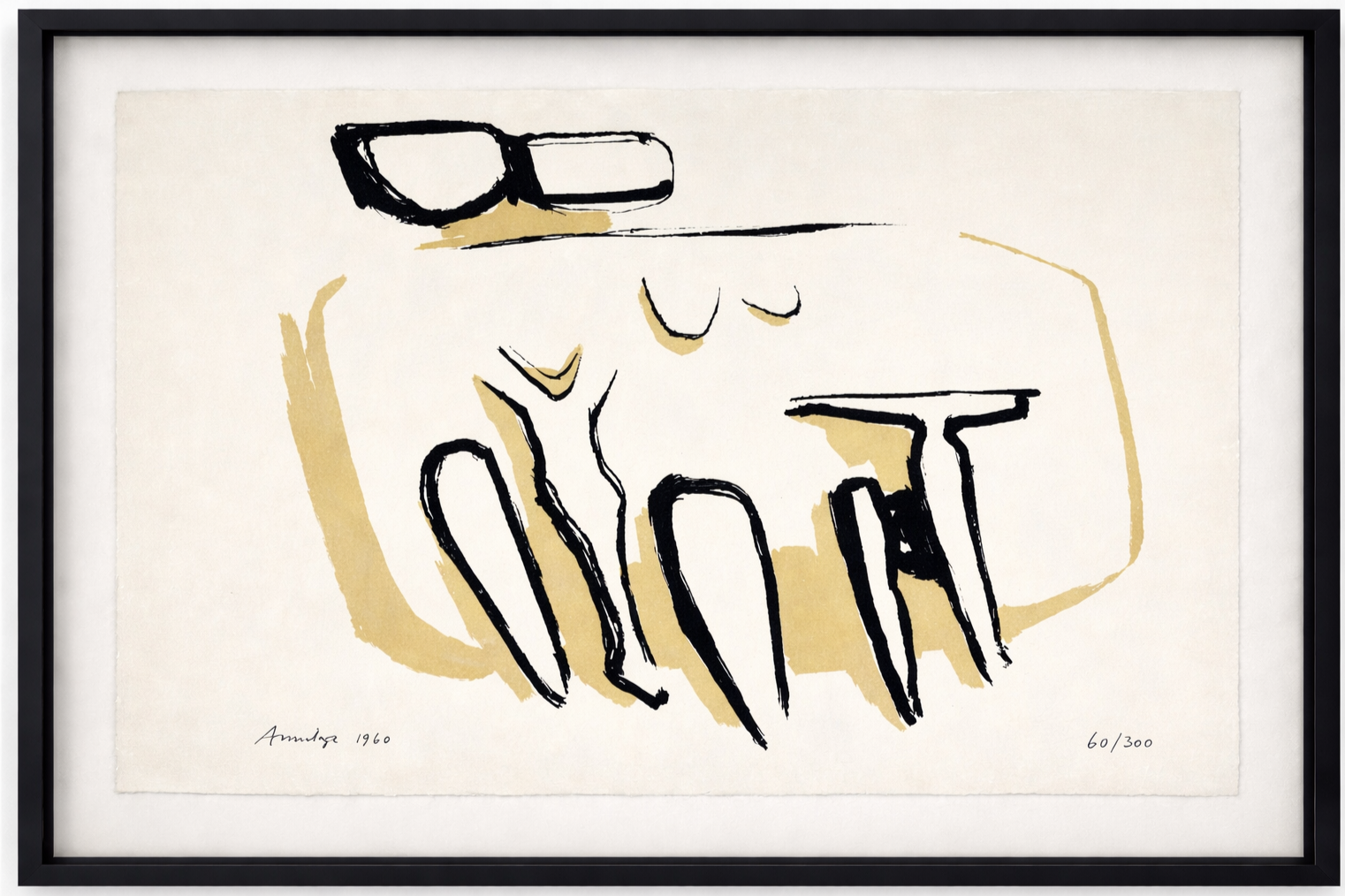
Kenneth Armitage RA (1916 - 2002), Seated Group from Europäische Graphik I, 1960
-
Tate Britain holds an edition of this lithograph in their collection.
Lithograph in colours, on wove paper.
Signed, numbered 60/300 and dated 1960 in pencil by Kenneth Armitage.
Printed by Curwen Studio, with the Curwen Studio blindstamp, London, published by Galerie Wolfgang Ketterer, Munich.
Sheet 39 × 57cm (15 × 22 in)
Framed 51 × 69cm (20 × 27 in)
On the reverse is a typed gallery label from Gwen Hughes Fine Art and a handwritten stock label from Osborne Samuel Gallery.
Artwork comes framed with Artglass AR 99 anti-reflective, 99% UV-protective glass.
In-person viewing is available by appointment.
-
A pivotal example of Kenneth Armitage’s exploration into post-war representations of the human form, situating the picture within European artistic developments of the time, notably the stylistic qualities of Lynn Chadwick, Reg Butler and Bernard Meadows.
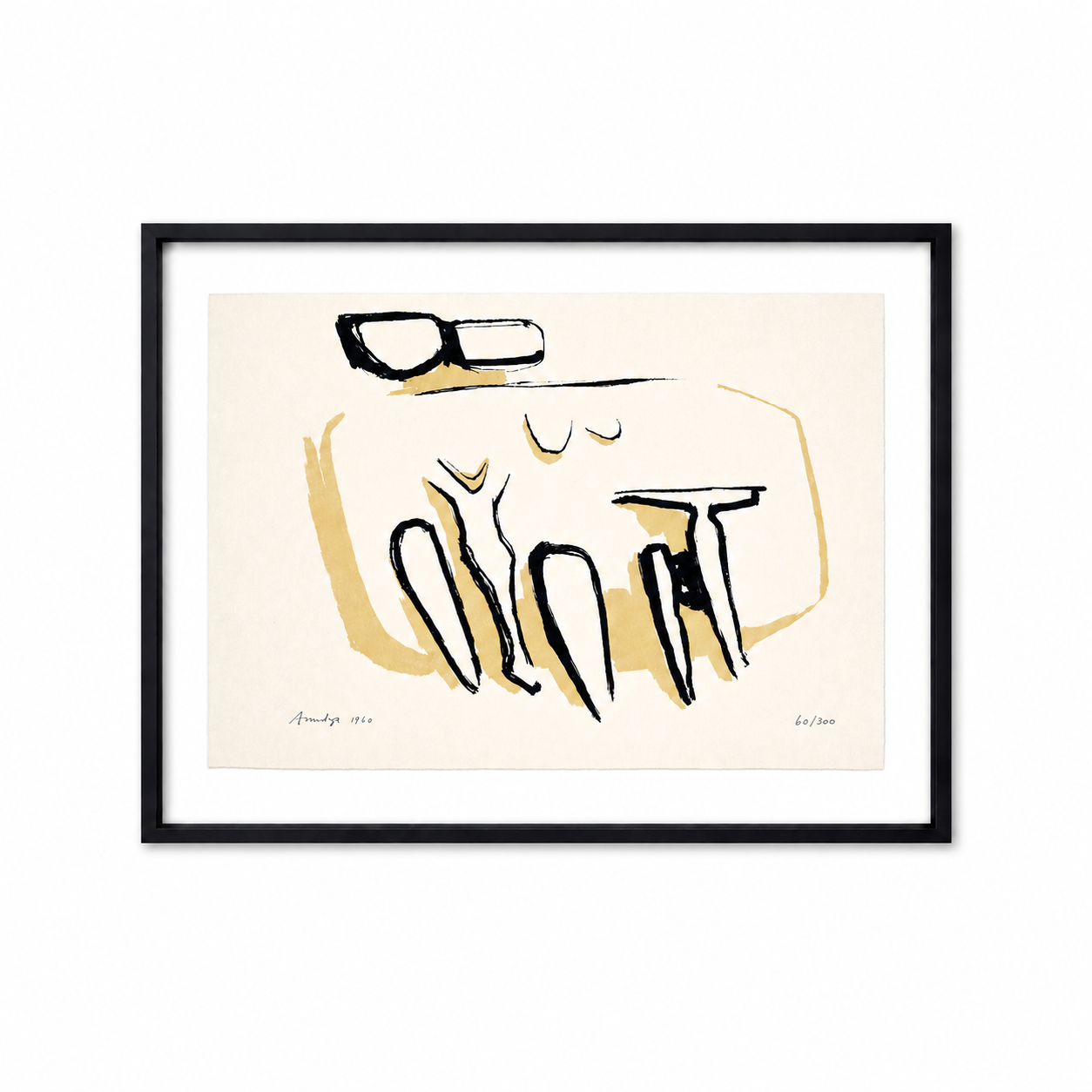
Full details:
Tate Britain holds an edition of this lithograph in their collection.
Lithograph in colours, on wove paper.
Signed, numbered 60/300 and dated 1960 in pencil by Kenneth Armitage.
Printed by Curwen Studio, with the Curwen Studio blindstamp, London, published by Galerie Wolfgang Ketterer, Munich.
Sheet 39 × 57cm (15 × 22 in)
Framed 51 × 69cm (20 × 27 in)
On the reverse is a typed gallery label from Gwen Hughes Fine Art and a handwritten stock label from Osborne Samuel Gallery.
Artwork comes framed with Artglass AR 99 anti-reflective, 99% UV-protective glass.
In-person viewing is available by appointment.
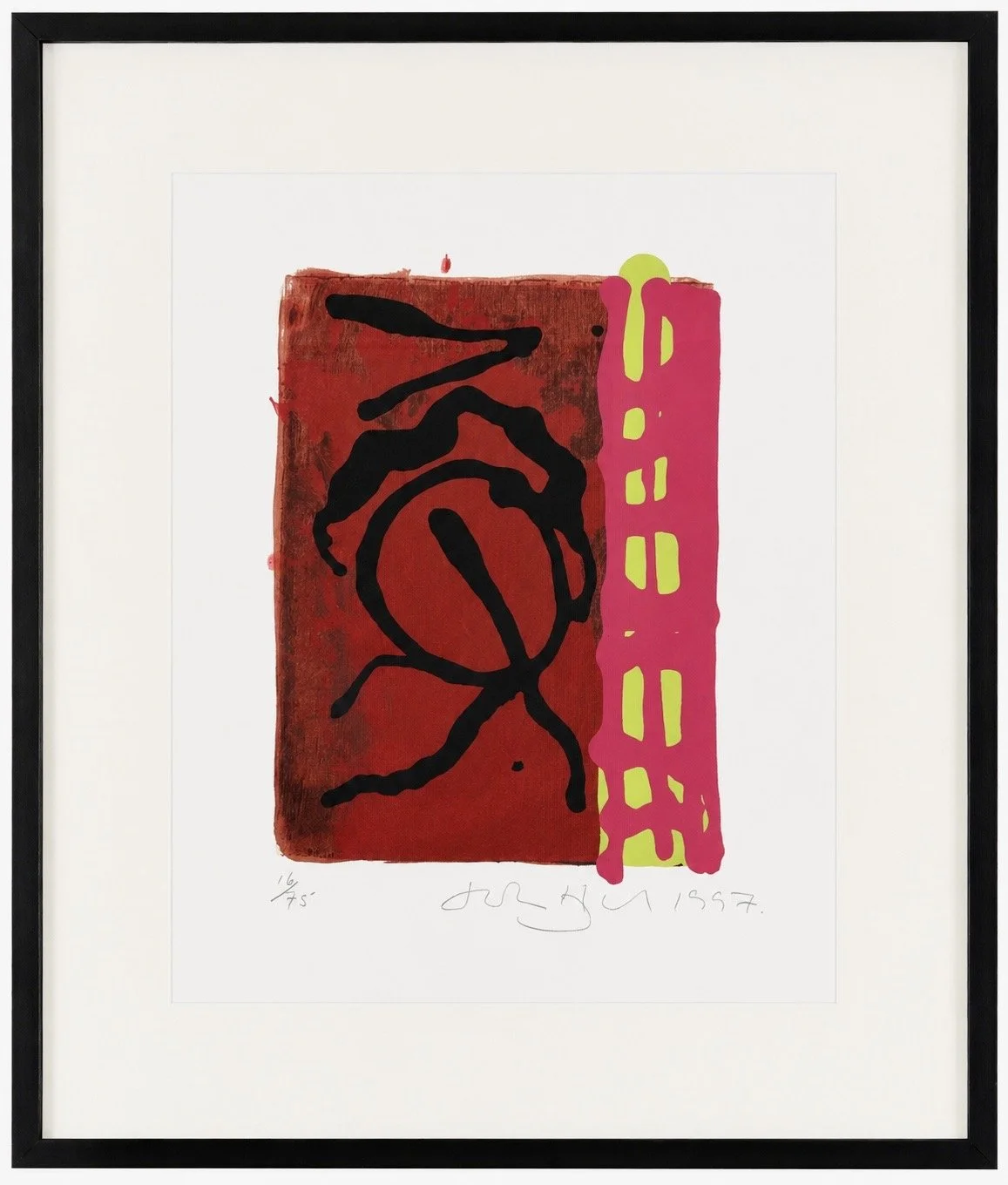
John Hoyland RA (1934 - 2011), Story from Nature, 1997
-
Screenprint on wove paper.
Signed, numbered 16/75 and dated 1997 in pencil by John Hoyland.
Sheet 53 × 43cm (21 × 17 in)
Framed 75 × 64cm (30 × 25 in)
Artwork comes framed with Artglass AR 70 anti-reflective, 70% UV-protective glass.
In-person viewing is available by appointment.
-
John Hoyland was widely considered as Britain’s answer to Abstract Expressionism, a theme which is encapsulated in this picture.
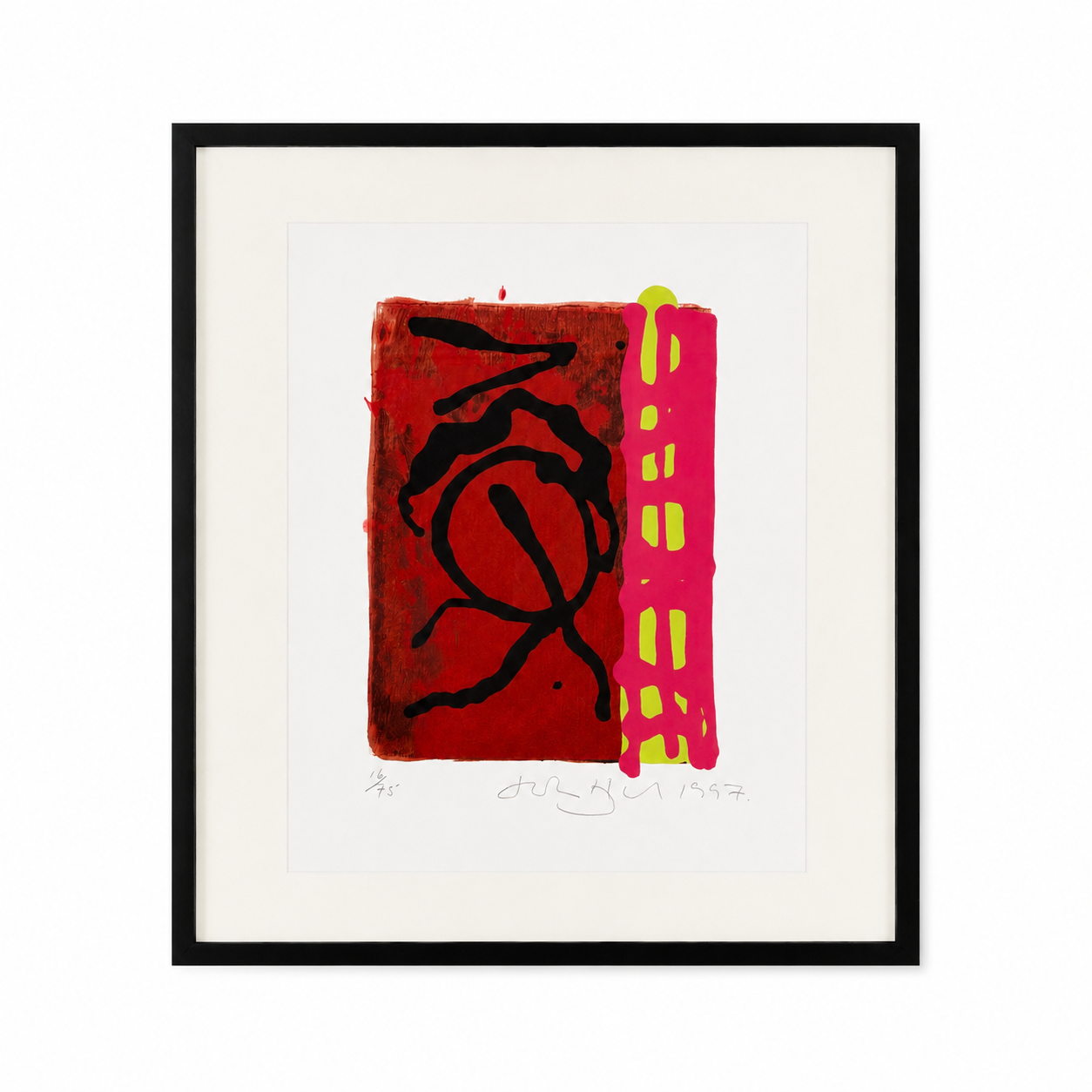
Full details:
Screenprint on wove paper.
Signed, numbered 16/75 and dated 1997 in pencil by John Hoyland.
Sheet 53 × 43cm (21 × 17 in)
Framed 75 × 64cm (30 × 25 in)
Artwork comes framed with Artglass AR 70 anti-reflective, 70% UV-protective glass.
In-person viewing is available by appointment.
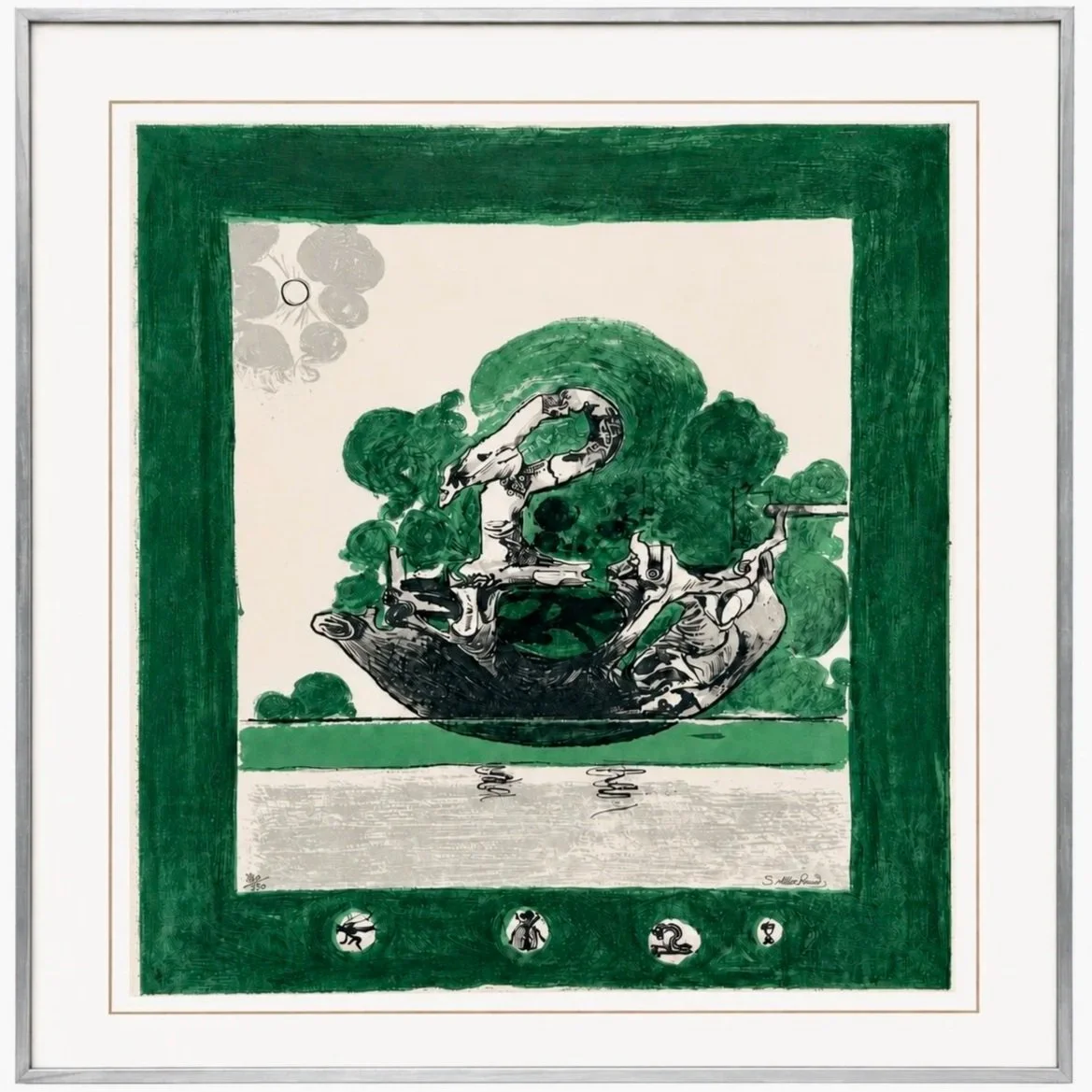
Graham Sutherland OM (1903 - 1980), Swan Like Form, 1971
-
Lithograph in colours on wove paper.
Signed and numbered 39/70 in pencil by Graham Sutherland.
Sheet 50 × 47.5cm (20 × 19 in)
Framed 64.5 × 60.5cm (25 × 24 in)
In-person viewing is available by appointment.
-
Graham Sutherland has been considered one of the greatest British landscape painters of the twentieth century, a reputation ultimately recognised by his appointment to the Order of Merit, one of the highest distinctions in British public life.
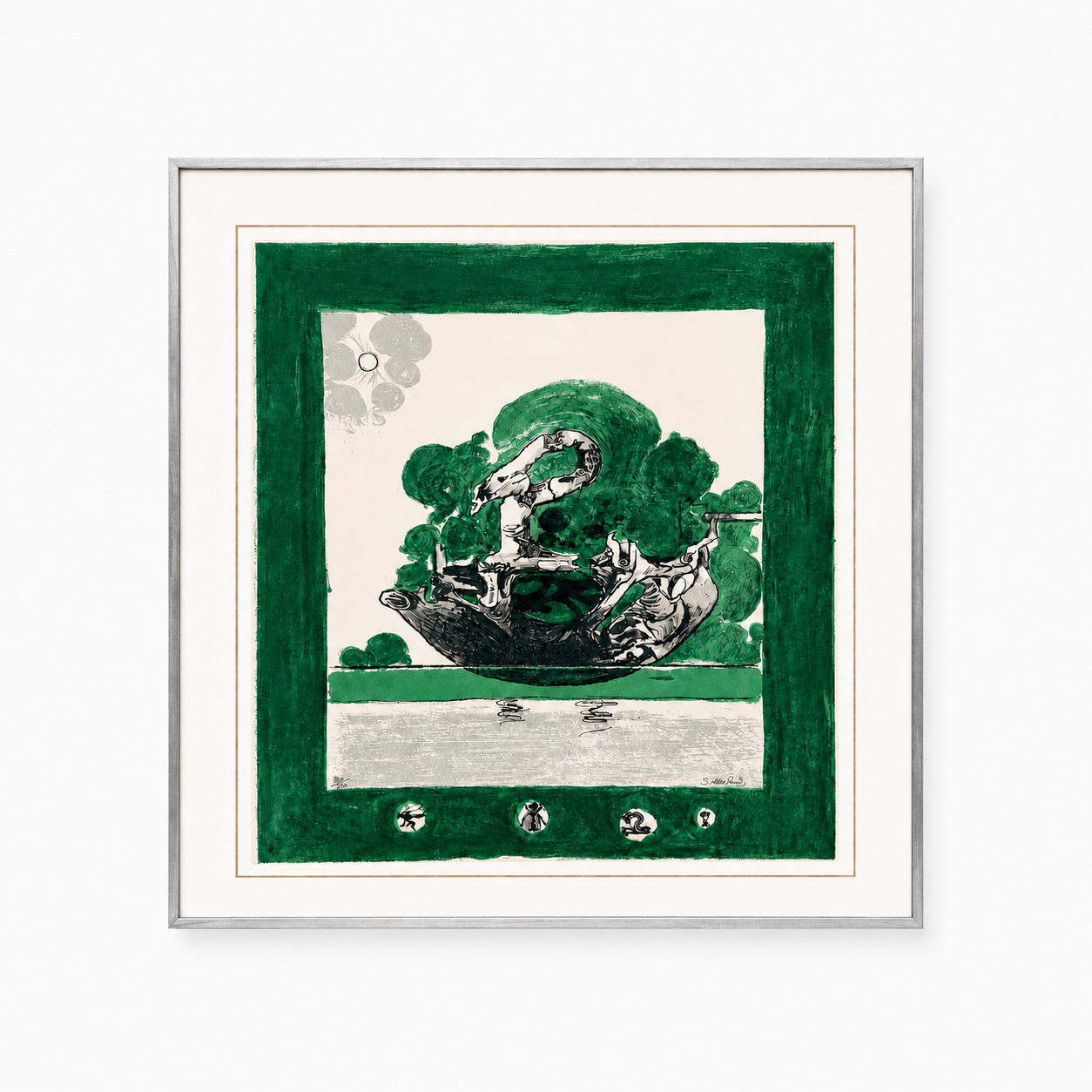
Full details:
Lithograph in colours on wove paper.
Signed and numbered 39/70 in pencil by Graham Sutherland.
Sheet 50 × 47.5cm (20 × 19 in)
Framed 64.5 × 60.5cm (25 × 24 in)
In-person viewing is available by appointment.
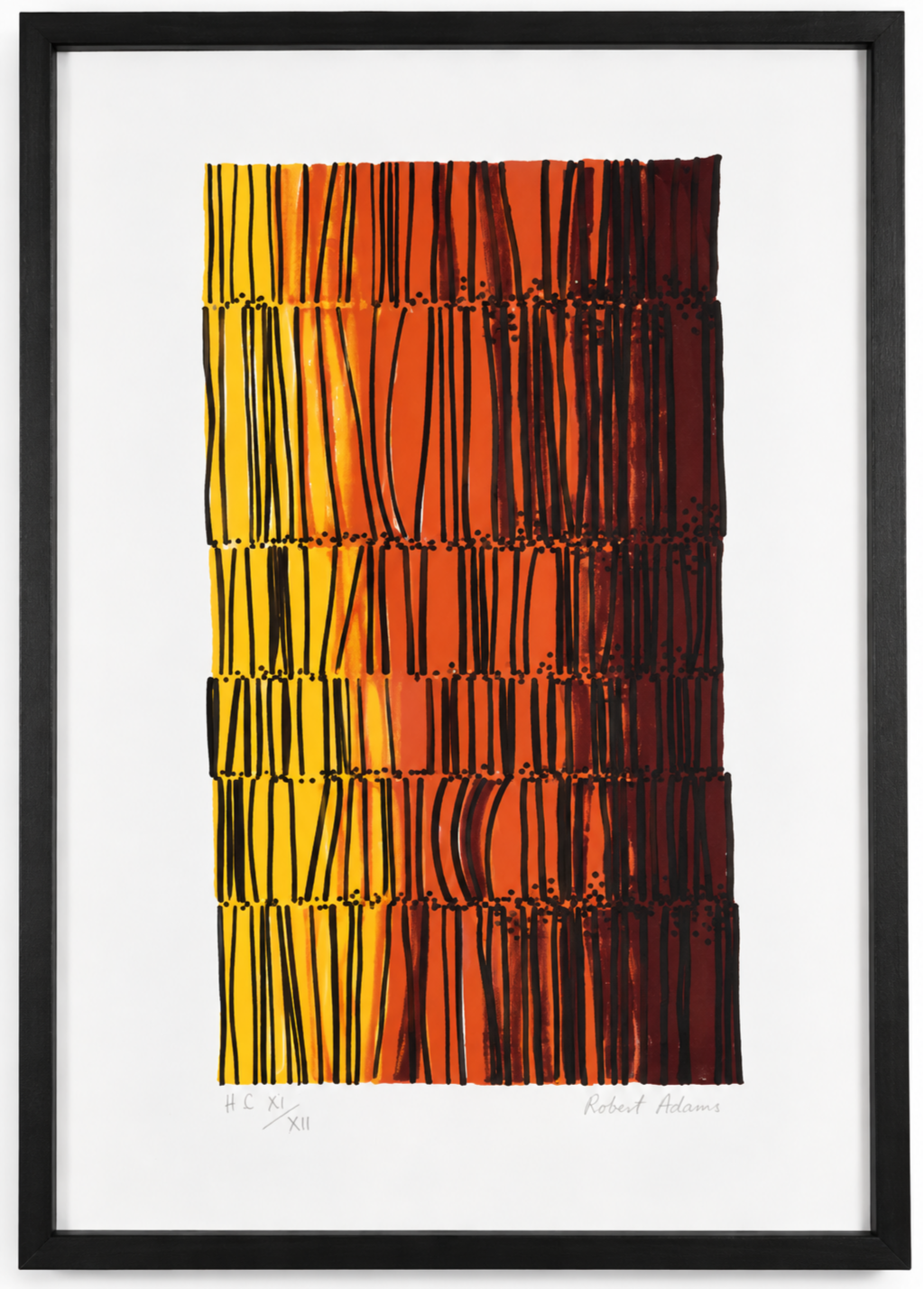
Robert Adams (1917 - 1984), Screen Form, 1973
-
Tate Britain holds an edition of this lithograph in their collection.
Lithograph in colours, on wove paper.
Signed and numbered H.C. XI/XII (Hors de Commerce) in pencil by Robert Adams.
Image 58 × 46cm (23 × 18 in)
Sheet 77 × 57cm (30 × 22 in)
Framed 80.5 × 59.5cm (32 × 23 in)
Part of The Penwith Portfolio, 1973, published by Penwith Galleries Ltd, St Ives.
Artwork comes framed with Artglass AR 70 anti-reflective, 70% UV-protective glass.
In-person viewing is available by appointment.
-
Described as the “overlooked genius of post-war sculpture”, Adams’ career was pivotal in shaping Britain’s artistic landscape in the mid-20th century.
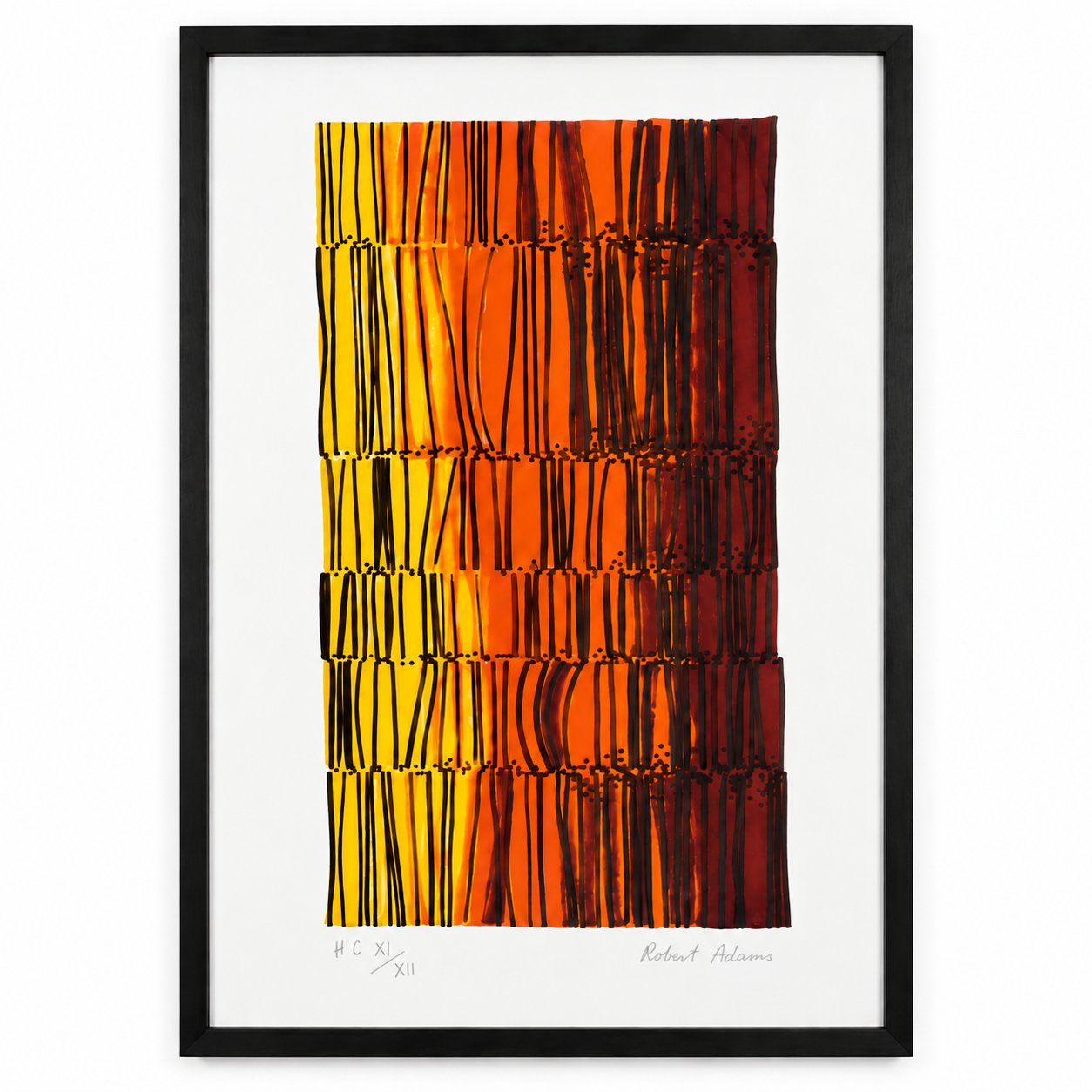
Full details:
Tate Britain holds an edition of this lithograph in their collection.
Lithograph in colours, on wove paper.
Signed and numbered H.C. XI/XII (Hors de Commerce) in pencil by Robert Adams.
Image 58 × 46cm (23 × 18 in)
Sheet 77 × 57cm (30 × 22 in)
Framed 80.5 × 59.5cm (32 × 23 in)
Part of The Penwith Portfolio, 1973, published by Penwith Galleries Ltd, St Ives.
Artwork comes framed with Artglass AR 70 anti-reflective, 70% UV-protective glass.
In-person viewing is available by appointment.

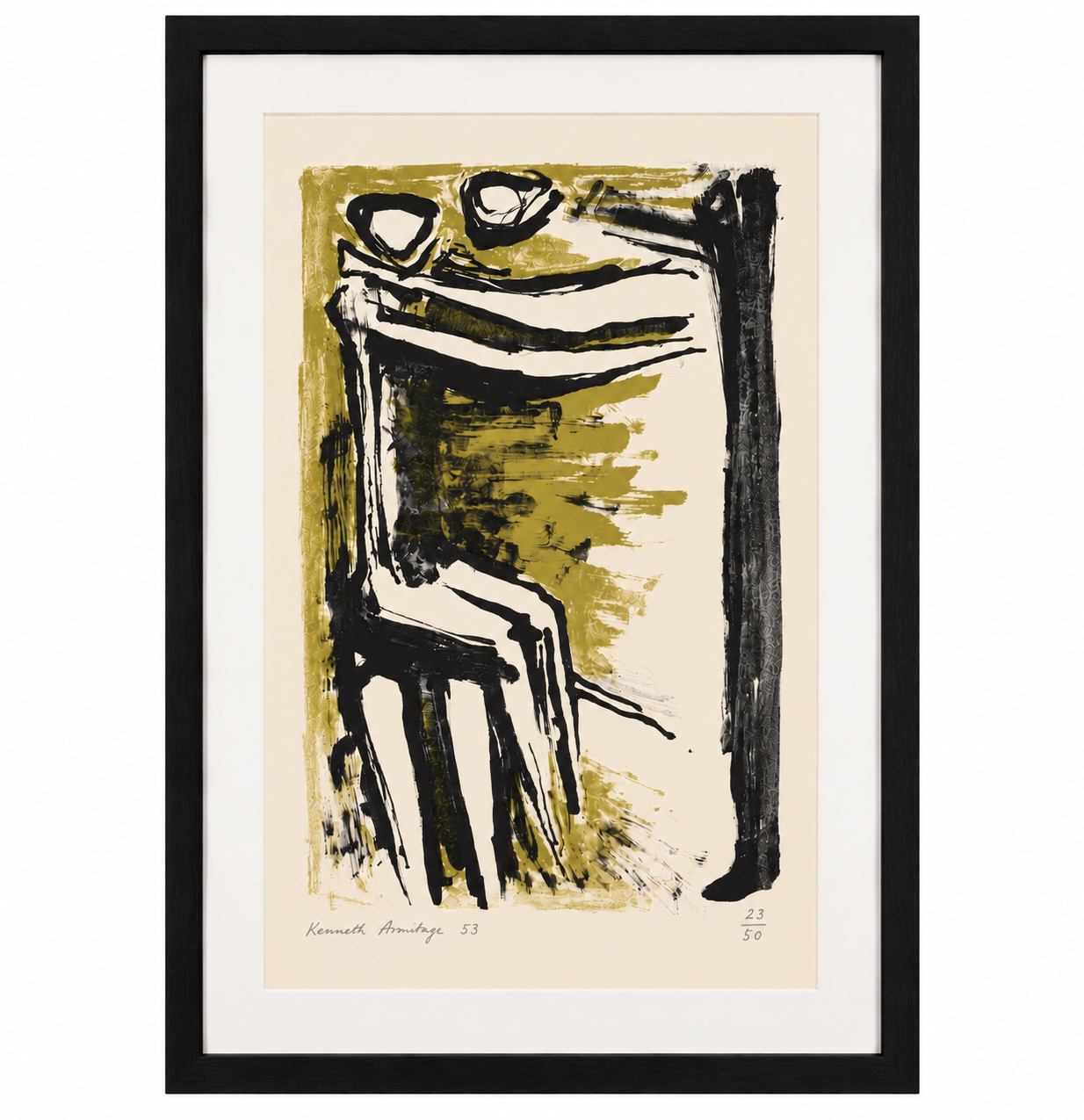
Kenneth Armitage RA (1916 - 2002), Two Figures, 1953
-
Lithograph in colours on Van Gelder Zonen wove paper.
Signed, dated and numbered 23/50 in pencil by Kenneth Armitage.
Sheet 50 × 30cm (20 × 12 in)
Framed 61 × 47cm (24 × 19 in)
Artwork comes framed with Artglass AR 70 anti-reflective, 70% UV-protective glass.
In-person viewing is available by appointment.
-
Produced a year after Kenneth Armitage represented Britain at the 1952 Venice Biennale, an occasion that led art historian Herbert Read to coin the term ‘Geometry of Fear’ which would become a defining phrase associated with Britain’s leading artists of the era.
Full details:
Lithograph in colours on Van Gelder Zonen wove paper.
Signed, dated and numbered 23/50 in pencil by Kenneth Armitage.
Sheet 50 × 30cm (20 × 12 in)
Framed 61 × 47 cm (24 × 19 in).
Artwork comes framed with Artglass AR 70 anti-reflective, 70% UV-protective glass.
In-person viewing is available by appointment.
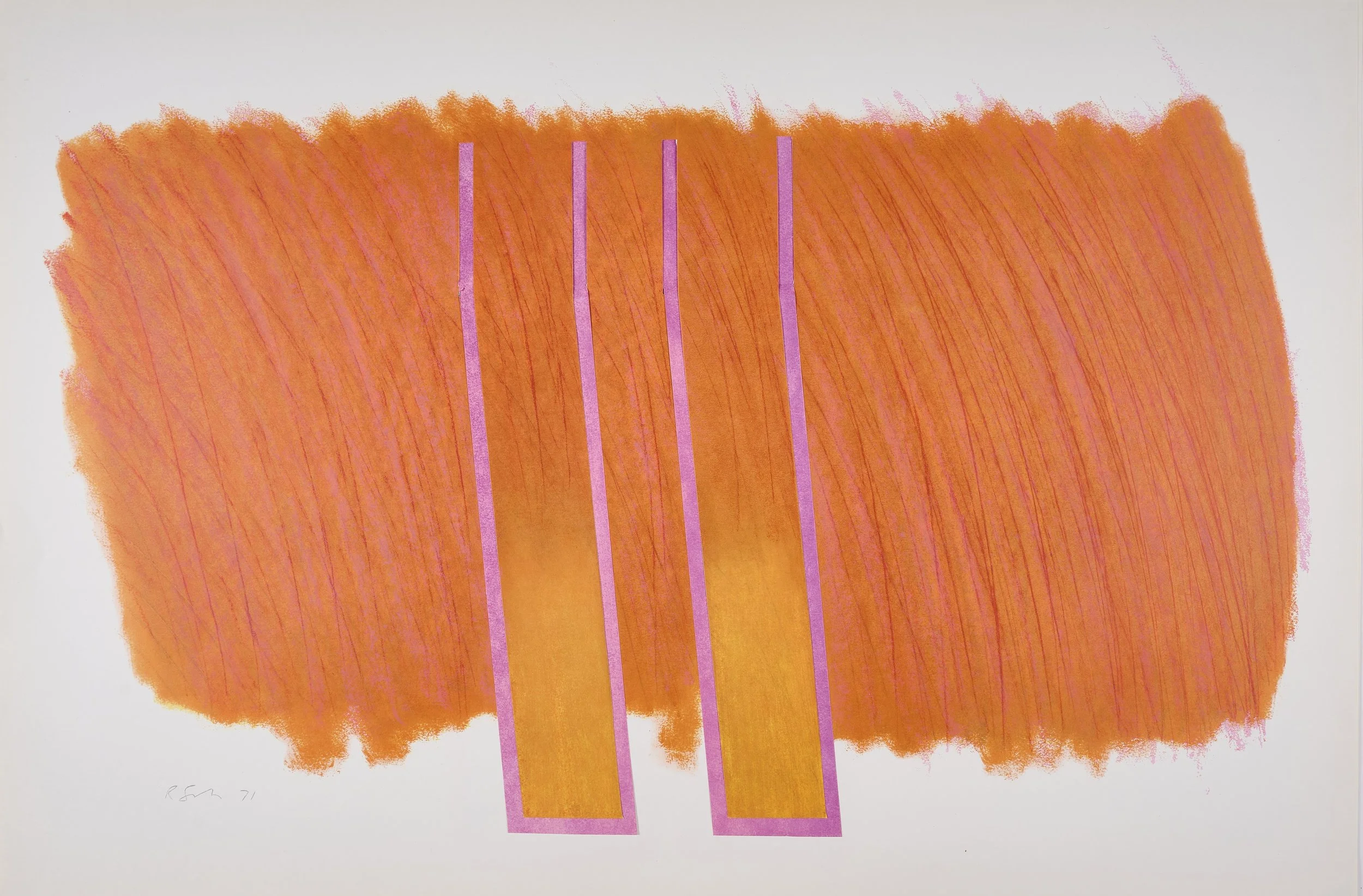
Richard Smith (1931 - 2016), Sun Curtain, 1971
-
Signed R Smith and dated 71 lower left in print.
Lithograph and collage on paper.Sheet 61 × 91.5cm (24 × 36 in)
Produced in an edition of 2000 by Bernard Jacobson Gallery.
In-person viewing is available by appointment.
Full details:
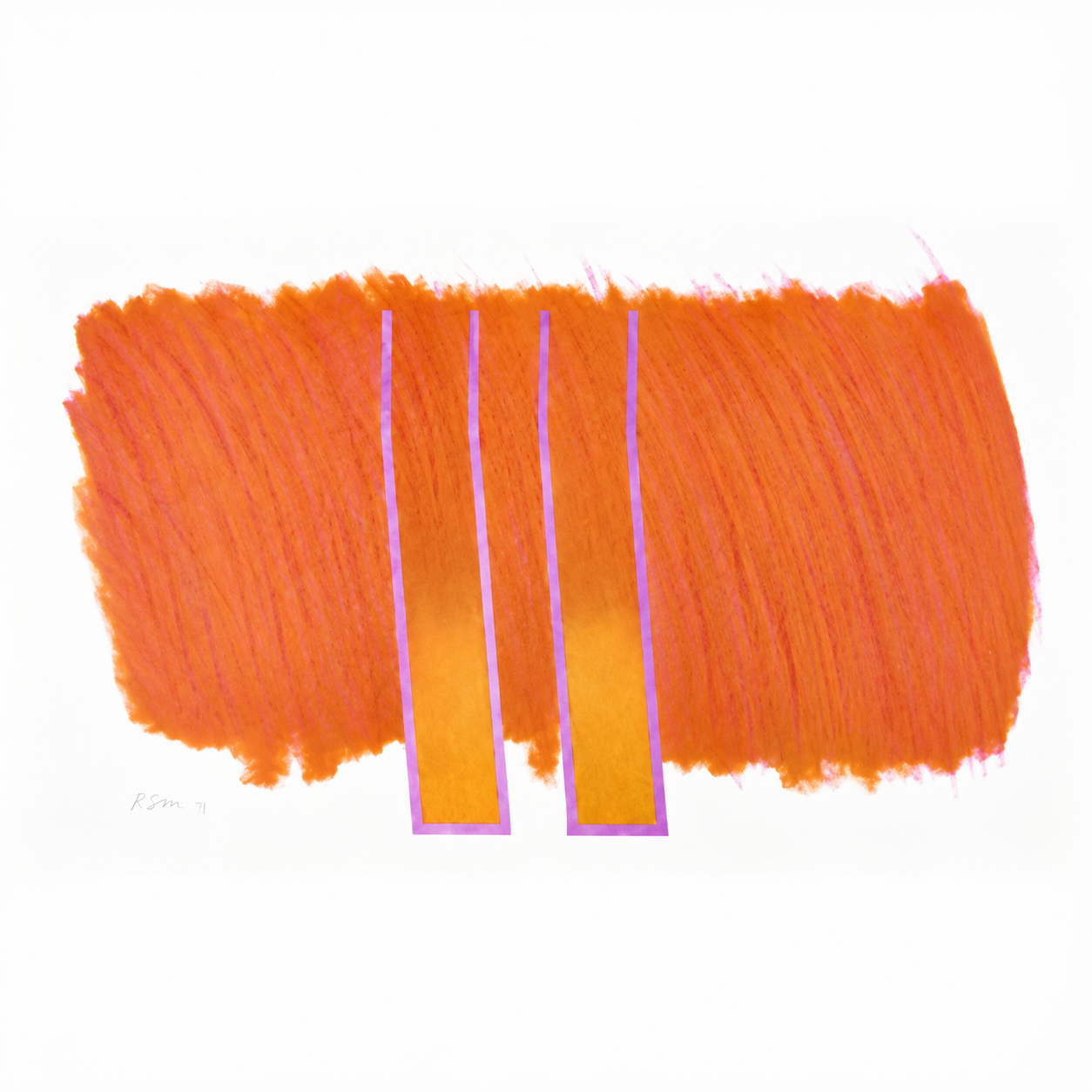
Signed R Smith and dated 71 lower left in print.
Lithograph and collage on paper.
Sheet 61 × 91.5cm (24 × 36 in)
Produced in an edition of 2000 by Bernard Jacobson Gallery.
In-person viewing is available by appointment.